AUSTIN, Texas — This Fall semester, The University of Texas at Austin is welcoming 5 new Donald D. Harrington Faculty Fellows who will be joining the prestigious legacy of this program’s rich 25 years history. These fellows, hosted by the UT Energy Institute, will be helping to advance the forefront of energy technology and innovation at UT. As fellows, these selected five rising stars in the field will collectively receive more than $1 million in funding to pursue innovative research and scholarship during their year-long residency at UT Austin.
Since 2001, Harrington Fellows have conducted imaginative, ambitious research with global impact. The program supports early- and mid-career scholars whose work has the promise to make lasting contributions to their fields. During their year at UT Austin, they can pursue new research directions, draw on the University’s facilities and resources, and collaborate with UT’s expansive community of students and researchers.
This year’s fellows were selected based on their research interest, cross-disciplinary potential, and alignment with this year’s selected theme of energy technology. Together, their work addresses some of the most pressing questions shaping the future of energy systems, including grid resilience, sustainable transportation, manufacturing impacts, next-generation energy technologies and energy policy.
“The Energy Institute supports a thriving energy innovation ecosystem at the UT campus and across our region,” Professor Brian Korgel, director of the Energy Institute and Rashid Engineering Regents Chair in the McKetta Department of Chemical Engineering, said. “With energy as the theme for the 2026-27 cohort of Harrington Faculty Fellows, the affiliation with the Energy Institute will provide unique opportunities to grow as researchers and scholars.”
As part of the 25-year anniversary celebration of the Donald D. Harrington Faculty Fellows program, these fellows will share their pivotal research and scholarship during a symposium planned for this Spring.
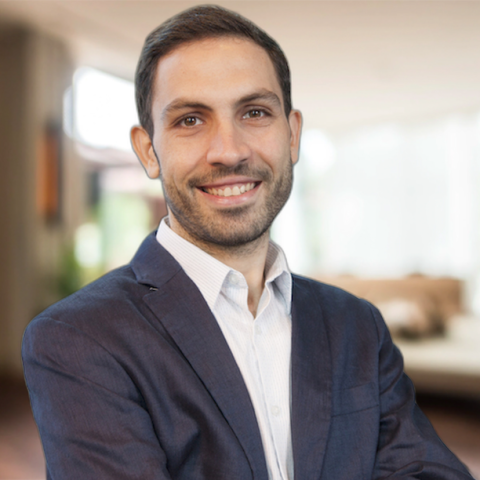
Charalambos Konstantinou
Charalambos (Harrys) Konstantinou is an associate professor in the Computer, Electrical and Mathematical Science and Engineering Division at King Abdullah University of Science and Technology, Saudi Arabia. His research focuses on the security and resilience of critical infrastructures, with an emphasis on smart grid technologies, inverter-based resources, the grid integration of large flexible loads such as AI data centers and real-time simulation.
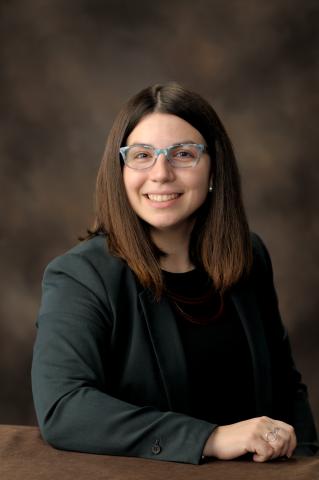
Eleftheria Kontou
Dr. Kontou is an assistant professor in the Department of Civil and Environmental Engineering at the University of Illinois Urbana-Champaign. Her research focuses on planning sustainable transportation systems and modeling their interdependencies with energy systems and the environment.
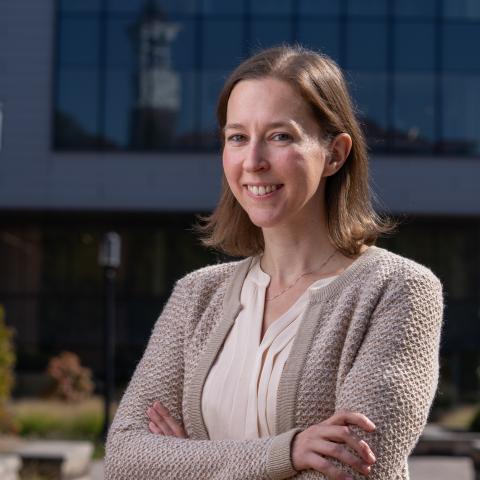
Heather Liddell
Heather Liddell is an assistant professor at Purdue University with joint appointments in Mechanical Engineering, and Sustainability Engineering and Environmental Engineering. She studies energy and environmental impacts in manufacturing, integrating economy-level and technology-level modeling approaches.
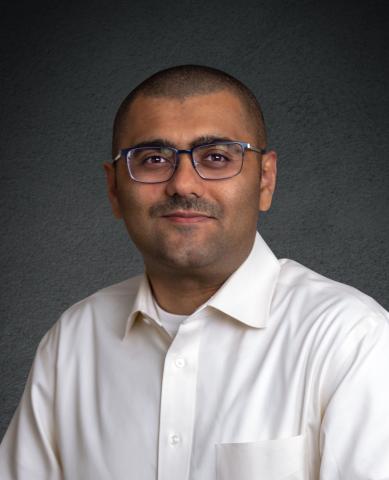
Aashutosh Mistry
Aashutosh Mistry is an assistant professor in the Department of Mechanical Engineering and a faculty fellow of the Payne Institute for Public Policy at the Colorado School of Mines. His work focuses on developing next-generation energy technologies (e.g., batteries), cultivating the workforce supporting these futuristic technologies (through research, teaching, mentoring and service), and engaging the public for science advocacy.
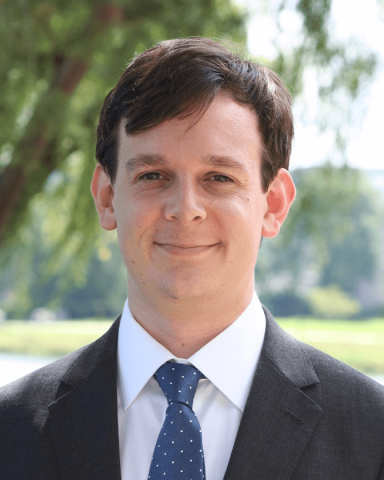
Nicholas Vreugdenhil
Nicholas Vreugdenhil is an energy economist and assistant professor at Arizona State University. His research combines economic theory and data to design efficient policies in settings including offshore oil and gas, electricity markets and regulatory enforcement.
About the Donald D. Harrington Faculty Fellows Program
This premier faculty fellowship advances UT Austin’s commitment to supporting high-impact research by bringing exceptional scholars to campus for a year of focused study and collaboration. Through the fellowship, visiting faculty can deepen their research, engage with UT’s academic community and contribute to new ideas that address complex challenges for the betterment of society.